Building sovereign public infrastructure always needs to address the full tech stack. Focusing solely on the „engine room“ will not suffice, neither does only replacing the office suite.
Initiatives like EuroStack inspired concrete action on the EU member state level to describe, plan and build holistic stacks that implement specific sovereignty criteria.
In my talk, I will discuss these developments, using the example of the Deutschland-Stack (Germany’s public sector tech stack program) to showcase the potential as well as the pitfalls.
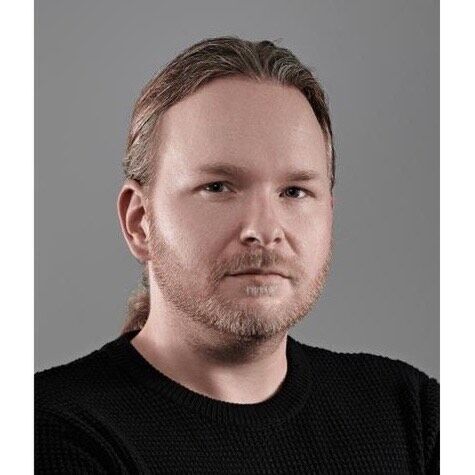
Jutta Horstmann is a computer scientist, entrepreneur and Open Source expert. As Co-CEO, she leads Heinlein Group, enabling businesses and public institutions to achieve digital sovereignty, security and sustainability. With more than 25 years of experience in IT and leadership, she... Read More →
Monday June 8, 2026 10:20 - 10:55 CEST Grand Salon
Madalin serves as EU Policy Advisor at OpenSSF, working at the intersection of cybersecurity, open source software, and European technology policy. He helps connect open source technical communities and policymakers, supporting the development of practical regulatory frameworks, aligning... Read More →
Christopher Robinson (aka CRob) is the Chief Security Architect for the Open Source Security Foundation. With over 25 years of Enterprise-class engineering, architectural, operational and leadership experience, CRob has worked at several Fortune 500 companies with experience in the... Read More →
Monday June 8, 2026 11:30 - 12:00 CEST Grand Salon
Head of Unit - Cloud and Software, European Commission
Since March 2024 Manuel Mateo Goyet is an Acting Head of the Cloud and Software unit at the European Commission, DG Connect and earlier he was a Deputy Head of Unit since 2019.
Before that, he served as Member of the Cabinet of Commissioner Gabriel advising her on questions of cop... Read More →
Monday June 8, 2026 12:00 - 12:20 CEST Grand Salon
The 27 May release of the European Commission’s Digital Sovereignty Package—centered on the Cloud and AI Infrastructure Development Act (CAIDA) and a renewed Open Source Ecosystem Strategy—represents an important shift toward a self-determined digital future. However, the transition from political ambition to a resilient digital landscape depends on whether the legislative text provides the necessary mechanisms to leverage open source as a strategic public good at scale. This session will provide space for open source ecosystem representatives coming from a commercial background to share their perspectives on this landmark development.
Senior Manager, Strategic Partnerships, Linux Foundation Europe
Paula has spent the past seven years working on strategies that bridge open technologies and digital policy. Her expertise revolves around digital policy and open source software, as well as digital transformation of European public services. Previously, she was a Strategic Partnerships... Read More →
Astor Nummelin Carlberg is a senior strategist operating at the intersection of digital infrastructure and European public policy. As Director of Open Source Sovereignty at SUSE, he leads engagement with European institutions to advance a secure and transparent digital future. Formerly... Read More →
Sebastian is a political consultant and former policy advisor in the European Parliament. Today, he represents the European Open Source Business Association APELL and has analysed the package and the Commission's long term positioning on Open Source.
Monday June 8, 2026 13:30 - 14:00 CEST Grand Salon
Like other markets around the world, European AI integration and digital transformation faces a "skills crisis" rather than a jobs crisis. While Europe reports a net hiring increase in technology for 2026, security and privacy concerns have surged to become the top barrier to technology adoption. Organizations struggle with a full-stack readiness problem, evidenced by a capability gap in AI security and low implementation of the foundational "PARK stack". This session discusses new data that reveals the gaps that need to be closed, and the shift toward internal development and training, where technical upskilling and cross skilling now rivals compensation (91%) for talent retention. We will discuss how European policy and ecosystems can support continuous learning and certifications to ensure secure AI scaling.
Senior Cybersecurity trainer, The Linux Foundation
Glenn Ten Cate is a cybersecurity expert and trainer at the Linux Foundation with more than 20 years of experience as an ethical hacker, educator, and offensive security practitioner. He previously co-created and led the Security Knowledge Framework, an open-source flagship project... Read More →
Sachiko Muto is the Chair of OpenForum Europe, a senior researcher at RISE Research Institutes of Sweden, and a Board member of the Drupal Association. She originally joined OFE in 2007 and served for several years as Director with responsibility for government relations and then... Read More →
Hilary Carter is a writer, researcher, and team leader, producing engaging, decision-useful insights that broaden the understanding of open source and emerging technologies and their impact on business, government, and society. She has contributed to books and numerous research reports... Read More →
Monday June 8, 2026 14:00 - 14:20 CEST Grand Salon
Open source software is routinely analysed as a market phenomenon: a sector, an industry, a competitive arena. That framing is wrong. Upstream open technology collaboration is a global commons that spans all sectors and industries: voluntary participation, shared governance, results available to all under open licences. It produces no products, fixes no prices, and forecloses no markets.
Where open source does intersect with competition, the dynamics run in one direction. Open licensing removes barriers to adoption. Open governance, the less-discussed but more important dimension, prevents capture by any single actor. And when governance fails, the fork is the corrective: faster, cheaper, and more precise than regulatory intervention. The distinction between upstream collaboration and downstream commercial activity is not a technical detail. EU procurement rules, the Cyber Resilience Act, the AI Act, and future MFF funding instruments all depend on getting it right.
Open source has never been European, American, or any other geographic construct—it is inherently global. Framing “European open source” as a distinct category is not only misleading, but strategically limiting. This talk challenges that narrative and argues for a shift in mindset: from regional identity to global leadership.
Crucially, the path to digital sovereignty does not lie in creating a siloed “European open source ecosystem.” Such an approach lacks the scale and network effects required for sustainability. Instead, sovereignty is achieved through deep participation in global communities—where influence is earned through contribution, leadership, and collaboration.
The core message is simple: European open source is global open source.
Head of Open Source Service & Network Automation, Nokia
Timo has over 25 years of experience in network systems, systems architecture research, new business incubation, to mobile network and operations systems standardization. In his current role Timo is with Nokia OSPO, responisble for Automation related open source projects and Regulatory... Read More →
Monday June 8, 2026 15:35 - 15:55 CEST Grand Salon
Deputy Director of R&D and Open Source Director, RTE
Lucian Balea est Directeur de Programme Open Source chez RTE, gestionnaire du réseau de transport d’électricité français. A ce titre, il dirige la stratégie open source adoptée par RTE pour décupler l’efficacité et l’innovation dans activités logicielles cœur de métier... Read More →
Dr. Marco Möller is Co-founder and CEO of Pionix GmbH, an industry leader for EV Charger Software. He chairs the EVerest TSC at LFE EVerest and initiated the growing community of companies, agencies, utilities, universities, and governments worldwide that collectively create and... Read More →
Monday June 8, 2026 15:55 - 16:25 CEST Grand Salon
Europe's telecom operators sit at the intersection of two of the EU's most pressing digital priorities: building resilient, sovereign infrastructure and deepening engagement with the open source ecosystem. Yet a coherent vision for how the telco industry, open source community, and public institutions should work together, grounded in contemporary challenges and needs, has historically remained elusive.
This session will present early findings from a forthcoming OFE vision paper exploring what structures, capabilities, and policy frameworks are needed to bring these actors into closer alignment. The paper draws heavily on secondary sources and expert interviews across the European telecoms and open source communities.
The presentation will offer a preview of the policy recommendations that will form the core of the full report, due for publication in late June 2026. It will share initial insights on how operators are currently engaging with open source, examining where the most significant capacity and organisational gaps lie, elaborating what a European-led cooperative model might look like, and considering potential future pathways for policy engagement.
Nick Gates is a Policy Advisor at OpenForum Europe, where he leads OFE’s work on the NGI Commons initiative and manages projects related to open source research and policy. Nick has significant experience in digital government, particularly around open source, public financial management... Read More →
Ola works as a Policy Advisor at OpenForum Europe in Brussels, where she delivers research and analysis on issues related to openness and the EU tech policy.
Monday June 8, 2026 16:25 - 16:55 CEST Grand Salon
The mission of IPCEI-CIS is clear: build Europe’s sovereign multi-provider cloud-edge continuum. Over 120 industry and research partners across 12 member states are actively involved. Each with their unique commercial interest and expertise, all expected to work together towards a pan-European interoperable goal. But funding instruments (like IPCEI, Horizon, and others) alone are not enough; they expose a “digital sovereignty paradox”. Digital sovereignty for Europe cannot be produced by a single vendor. It can only be obtained with an ecosystem of vendors, no winner-takes-it-all. And companies collaborating jointly in software require a unique model of ownership.
We realized that a neutral, open source, digital commons, and governance infrastructure to collaborate in code and to create a sovereign commodity base was missing.
This session tells the story of why SAP championed the move toward open source and founded NeoNephos under LF Europe. We will discuss the strategic necessity of introducing a neutral governance layer into digital sovereignty missions. We will explore how learnings from our Open Source Program Office (OSPO) guided us with proper instruments.
Director of the SAP Open Source Program Office, SAP
Software engineer by trade, 20+ years at SAP in various software engineering roles, 5+ years working on open source projects in my spare time. Currently leading the SAP Open Source Program Office (OSPO).
Former VP on Cloud Native Strategy at SAP turned NeoNephos Ambassador. After establishing Kubernetes in the enterprise foundation at SAP, he’s now focused on the cloud-native ecosystem and mindset for digital sovereignty. He previously led SAP's substantial project within EU IPCEI-CIS and established NeoNephos as its "OSS Infrastructure". Vasu holds a degree in Physics and Computer Science from the University of Osnabrück but refuses to be tied down to any geography. He prefers it in the cloud... Read More →
Monday June 8, 2026 16:55 - 17:15 CEST Grand Salon